
Manufacturing process
Apparel Manufacturing Process: From Design to Production
A practical guide to the apparel manufacturing process — from product briefing and development through fabric sourcing, garment sampling, bulk production, quality control and dispatch preparation.
Overview
How the apparel manufacturing workflow fits together
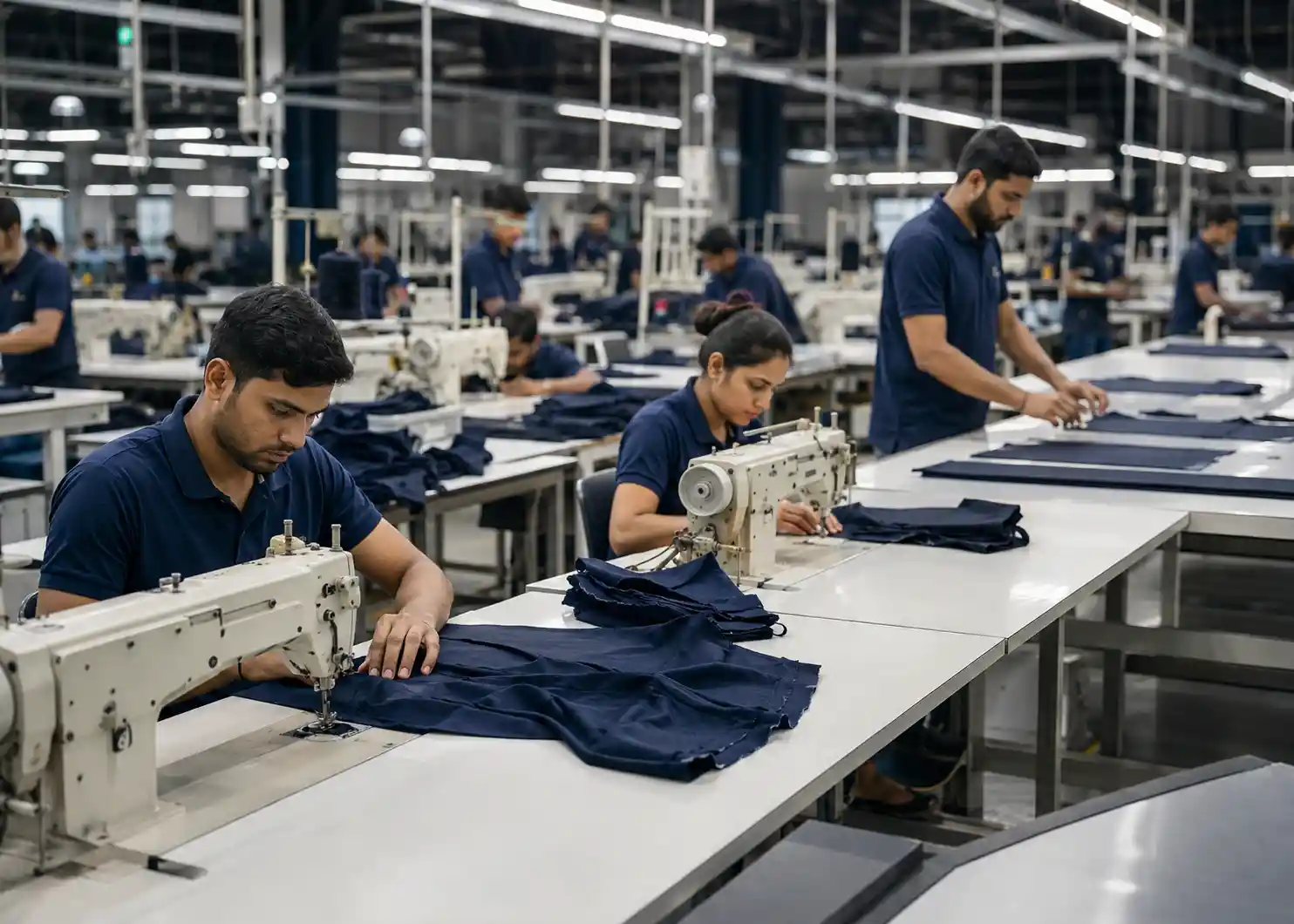
The apparel manufacturing process turns design intent into production-ready garments through defined stages: briefing, technical development, materials, sampling, production planning, cutting and sewing, finishing and quality review, then packing preparation.
For brands, sourcing teams and private-label buyers, a clear apparel production process reduces late changes, protects fit and presentation, and creates a sealed reference for repeat bulk clothing manufacturing.
Exact clothing manufacturing steps vary by product category, fabric complexity, branding requirements and buyer approval gates. Use this guide as a shared reference for garment production stages, then confirm programme specifics with our team.
Process
Eight garment production stages
Use these clothing manufacturing steps as a shared reference when preparing briefs, samples and bulk production approvals.
Product briefing and requirements
Define garment category, estimated quantities, design references, technical requirements, target market, delivery expectations and approval criteria so development starts from shared priorities rather than assumptions.
Product development and technical specifications
Interpret the brief into construction direction, specification notes, fit expectations and manufacturing constraints. Clear technical preparation helps sampling begin against an agreed reference.
Fabric and trim sourcing
Review fibre composition, weight, hand-feel, colour, trims and availability against garment construction and presentation needs. Material direction should support both sample development and later bulk production.
Garment sampling and approval
Develop prototypes for fit, measurements, construction, materials and branding review. Revision cycles continue until an approved sample becomes the sealed reference for bulk manufacturing.
Production planning and preparation
Organise cutting plans, size breakdowns, material readiness, construction standards and production instructions around the approved sample so bulk work follows a controlled plan.
Cutting, sewing and assembly
Convert approved constructions into bulk garments through cutting, sewing operations and garment assembly, with in-process checks that help keep workmanship aligned to sealed standards.
Finishing and quality control
Complete finishing, measurement review, stitching inspections and visual checks against approved specifications. Quality control in apparel manufacturing protects consistency; it does not replace clear sealed samples.
Packing and dispatch preparation
Prepare folding, labeling, assortment packing and shipment documentation coordination according to the programme brief. Exact logistics arrangements are confirmed per order rather than assumed as fixed guarantees.
For buyers
Buyer considerations that shape production
Practical points that help brands and sourcing teams prepare clearer briefs before clothing manufacturing begins.
What to prepare before production
Share garment category, design references or tech packs, size ranges, fabric preferences, branding instructions, estimated quantities and any target timeline. Incomplete briefs are a common source of delay.
Why sample approval matters
An approved garment sample locks fit, construction, materials and branding before bulk begins. Sample development and bulk manufacturing are related stages — not interchangeable shortcuts.
How materials and branding affect development
Fabric behaviour, trim choices, embroidery or print placement and labeling influence sampling cycles and production planning. Confirm presentation details before sealing the sample.
Where quality checks fit
In-line and final checks review measurement, construction and finishing against sealed samples. Quality expectations should be visible in the brief and approval package.
Repeat orders and sealed specifications
Approved specifications and sealed samples help repeat bulk clothing manufacturing stay consistent across later runs when programme requirements remain unchanged.
Common causes of manufacturing delays
Late design changes, unresolved material approvals, incomplete size breakdowns and unclear branding artwork often extend garment production stages. Early clarity shortens revision loops.
FAQs
Apparel manufacturing process questions
Concise answers for buyers evaluating garment manufacturing workflows before requesting a programme quote.
What are the main stages of apparel manufacturing?
Typical garment production stages include briefing, product development, fabric and trim sourcing, sampling and approval, production planning, cutting and sewing, finishing and quality control, then packing and dispatch preparation.
What information is needed before clothing production begins?
Buyers should share garment category, design references or technical notes, size and measurement needs, fabric preferences, branding requirements, estimated quantities and any target timeline. Exact needs depend on the programme.
Why is garment sampling important?
Sampling converts specifications into a physical reference for fit, construction, materials and branding. Approved samples guide bulk manufacturing and help reduce costly late changes.
What happens after a garment sample is approved?
Production planning organises cutting, size breakdowns and construction instructions around the sealed sample. Bulk cutting, sewing, finishing and inspection then follow the approved standard.
How is quality checked during apparel production?
Quality checks typically include in-process construction review, measurement checks and finishing inspection against sealed samples and agreed programme requirements.
What affects the apparel manufacturing timeline?
Category complexity, fabric availability, sampling revision cycles, branding approvals and packing requirements all influence timing. Timelines are discussed against each brief rather than published as fixed guarantees.
Next step
Planning your next apparel manufacturing programme?
Share your product category, specifications, estimated quantities and target timeline to discuss a manufacturing path.